
Conference Photography Lighting and Venue Access Planning
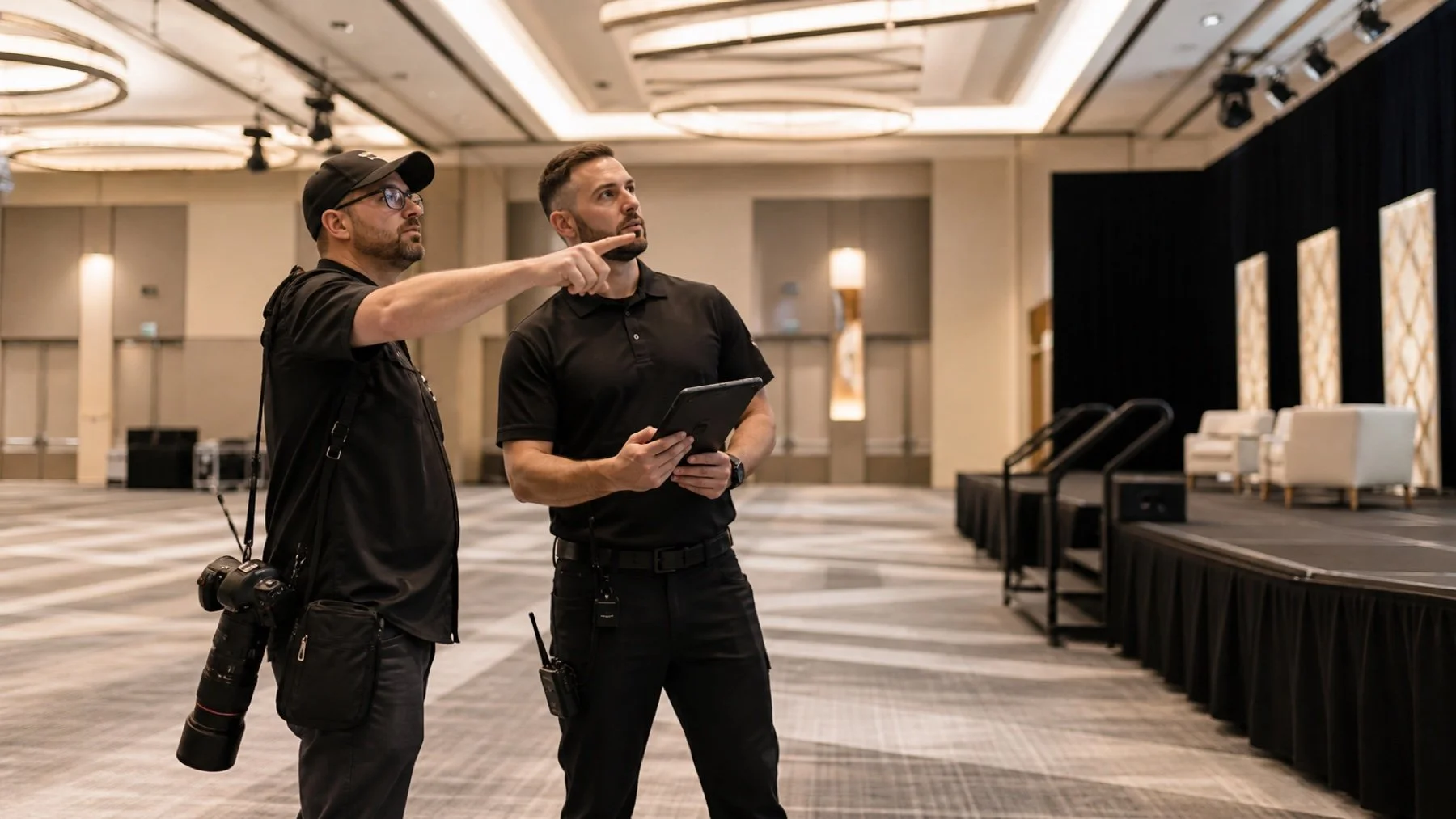
Conference photography lighting and venue access affect what your photographer can capture and how quickly the crew can move. A strong agenda cannot solve a dark stage, a blocked aisle, or a missing credential. Confirm the physical conditions with the venue and production team before event day.
Request a useful lighting test
Ask the audiovisual team to run the actual stage look, presentation screens, walk in cue, panel cue, and audience question lighting. Work lights do not show how the room will photograph once the program starts.
Check skin tone, brightness across the stage, and the balance between the speaker and screens. If a presenter walks beyond the lit area, mark the usable boundary or adjust the cue before rehearsal ends.
Document rules that limit camera positions
Confirm whether photographers can use the centre aisle, side aisles, stage wings, balcony, backstage area, and front row. Ask about tripods, light stands, flash, cable covers, and quiet zones.
Share those answers in writing. A security team working from a different rule can stop coverage during a key moment even when the event producer expected access.
Treat load in as part of coverage
Provide the correct entrance, loading window, parking process, freight elevator instructions, and credential pickup location. Include the name and phone number of the person who can solve an access problem before doors open.
Reserve secure storage when the crew moves across several rooms. Long returns to a loading area waste coverage time and may force unnecessary equipment movement through guest spaces.
Plan for room changes and mixed light
Breakout rooms often use different fixtures, window light, and screen brightness. Give the photographer access before attendees enter so exposure, white balance, and movement routes can be checked without disrupting a session.
Tell the crew when shades, room lights, or stage cues change during the program. A lighting transition may be intentional, but advance notice helps protect the speaker sequence around it.
Combine venue facts with editorial priorities
Access planning should serve the coverage brief. Protect the key speaker, sponsor, audience, networking, and room images first, then decide which positions and tests are necessary to get them.
Review these details with your conference photography provider and venue contact together. The final brief should identify both the desired frame and the practical route to capture it.