
Corporate Event Video Interview Planning
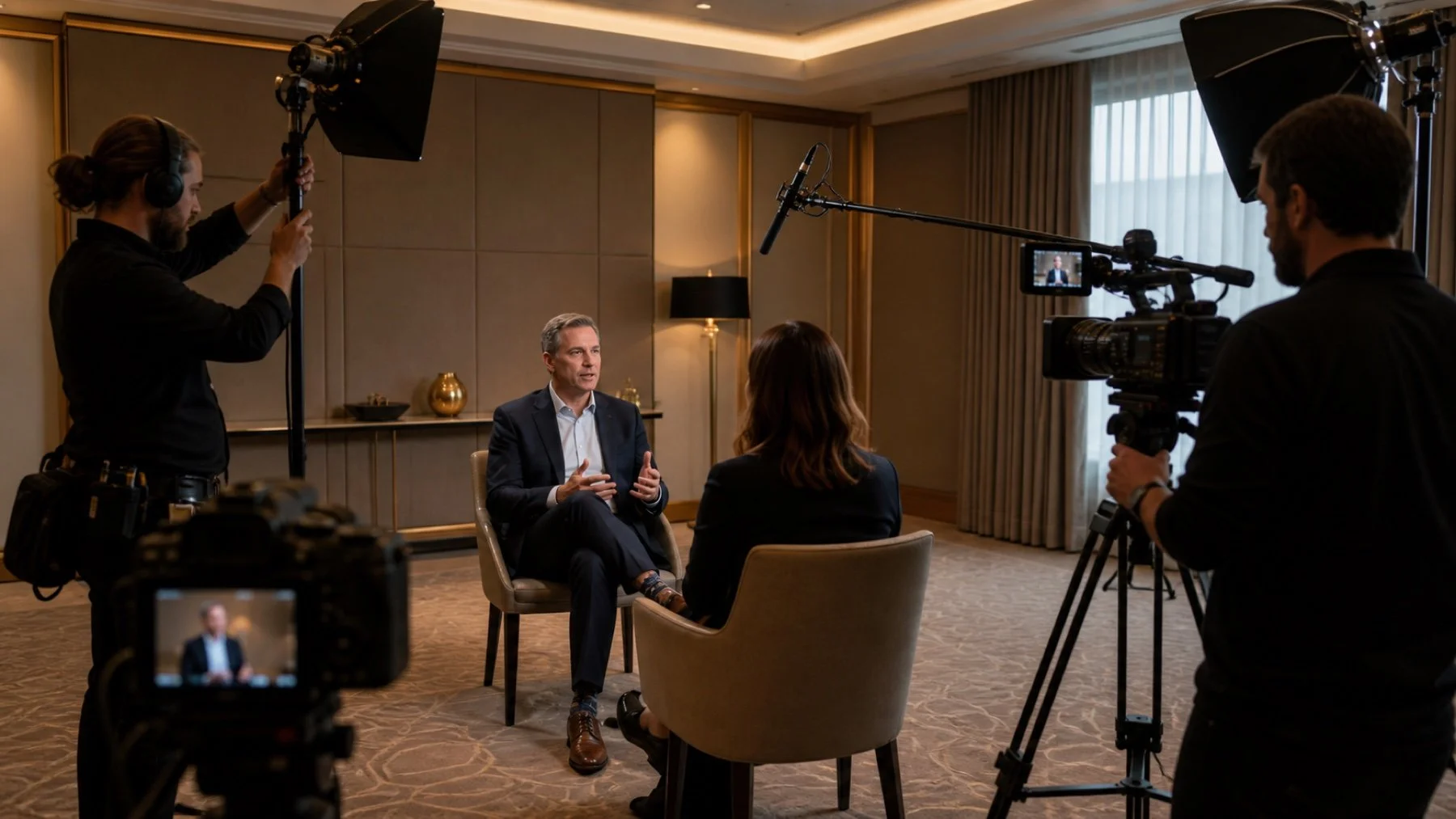
Corporate event video interview planning starts with the finished piece, not the camera. Decide what the audience should learn, where the edit will appear, and which voices can support that point. Then plan guests, questions, sound, timing, and approvals around the live event.
Choose the edit before you invite speakers
A thirty second social clip needs concise answers and a simple visual frame. A customer story, recruitment piece, or conference recap needs more context and a wider range of voices. Define the format, audience, and desired length first.
Write one sentence that the final edit must communicate. Use it to choose contributors. A senior title does not guarantee the clearest answer, and too many interviews can bury the strongest story.
Recruit contributors with a real schedule
Ask for participation before the event and explain the topic, time required, recording location, and intended use. Collect name, title, organization, pronunciation, and any approval requirement.
Give each guest a specific arrival time plus a buffer. Do not schedule a speaker during the minutes before a keynote or immediately after a demanding session. Assign a host who can find contributors and keep the interview area moving.
Write prompts that produce complete answers
Use short, open prompts tied to the story. Ask for a concrete change, decision, example, or lesson. Avoid questions that can be answered with yes or no.
Tell guests to include the subject in their response because the interviewer may not appear in the edit. Keep a follow up prompt ready when an answer is broad, but do not hand the guest a script that removes their natural language.
Protect sound and visual continuity
Choose a quiet area away from public address speakers, service doors, coffee stations, and loud networking traffic. Test the room during an active period if possible. Sound that seems manageable during setup can overwhelm speech once guests arrive.
Keep the background relevant but controlled. Confirm power, floor space, seating, and venue access. If interviews run through changing daylight, plan how the crew will maintain a consistent look.
Plan release, review, and delivery
Confirm participant release requirements and the organization's approval process before recording. Decide whether legal, communications, the contributor, or a client contact must review the edit, and set a deadline for consolidated feedback.
Place this workflow inside the full event video production plan. The crew can then balance interviews with stage coverage and protect the recordings that matter most.
Prepare the interview station for real event pressure
Decide whether each interview must stand alone or will be supported by event footage. A stand alone answer needs complete context in the speaker's own words. An answer used under a narrated recap can be shorter and more specific because the surrounding edit supplies the setting.
List required horizontal, vertical, captioned, silent autoplay, and presentation screen versions before filming. Those destinations affect composition and answer length. Capturing with them in mind is more reliable than trying to rescue every format from one tight frame.
Confirm a backup contributor for every essential viewpoint. Travel delays, client conversations, and agenda changes can remove a planned speaker with little warning. A prepared alternate lets production continue without lowering the quality of the story.
Use a host or producer to greet contributors, confirm names and titles, and keep the queue moving. The camera operator should focus on sound, framing, and performance instead of searching the venue for the next person.
Do not hand every contributor a script unless exact wording is required. Most people sound more natural when they understand the point and answer in their own language. If a legal or brand phrase must be exact, record that line separately from the conversational questions.
Give reviewers a deadline tied to the campaign date. If a first cut supports a next morning announcement, approvals and brand assets must be ready before filming. A fast edit cannot compensate for an unavailable logo, unresolved speaker title, or several reviewers sending conflicting notes.