
The keynote has a strong message, but a still photograph cannot carry the speaker's words. The sponsor wants proof of the room, but a full video crew may add little. Add video to conference photography when motion, sound or a complete message is central to the asset plan.
Before adding a video crew to a Toronto conference, we would write down the communication task that a still gallery cannot do. A complete keynote, an interview answer and an atmospheric recap each demand different sound, access and review. The intended output should choose the crew plan.
Use the message, not the screen, to decide
Choose stills for fast visual proof, portraits and a flexible image archive. Add video when the audience needs to hear a complete message, see movement or understand an answer in the speaker's own words. A screen on stage is not itself a reason to commission another crew.
Test the proposed output against the room. A keynote recording needs a clean audio and slide path. An interview needs a quiet location and a willing speaker. A recap needs a story and release deadline. If none of those conditions can be protected, state the limitation before promising a film.
Add keynote recording when the message must survive
Record a keynote when the complete presentation, speaker delivery or later training use matters. Confirm audio feeds, slide treatment, camera positions and permission to distribute the recording.
A highlight clip needs clean sound and enough context around the chosen line. Give the video team the topic and likely sections before the session rather than choosing a quote only after the event.
Add interviews when first person context matters
Interviews can capture executive, customer or partner explanations that photography cannot. They need a quiet location, prompts, schedules, release handling and one owner for names and titles.
Do not assume a roaming crew can collect strong interviews between every other assignment. Reserve time and protect the location so the answers sound deliberate rather than improvised in a loud corridor.
Add a recap only when you can define its job
A recap may support attendance, culture, sponsor reporting or a campaign close. Name the audience, duration, release date and required moments. Without that purpose, the edit becomes a sequence of attractive but interchangeable scenes.
Uptown Media's corporate video production includes recap films, keynote capture, interviews and vertical cuts. Its conference photography service supports the still image plan. Scope them around one priority map.
Coordinate the two records on site
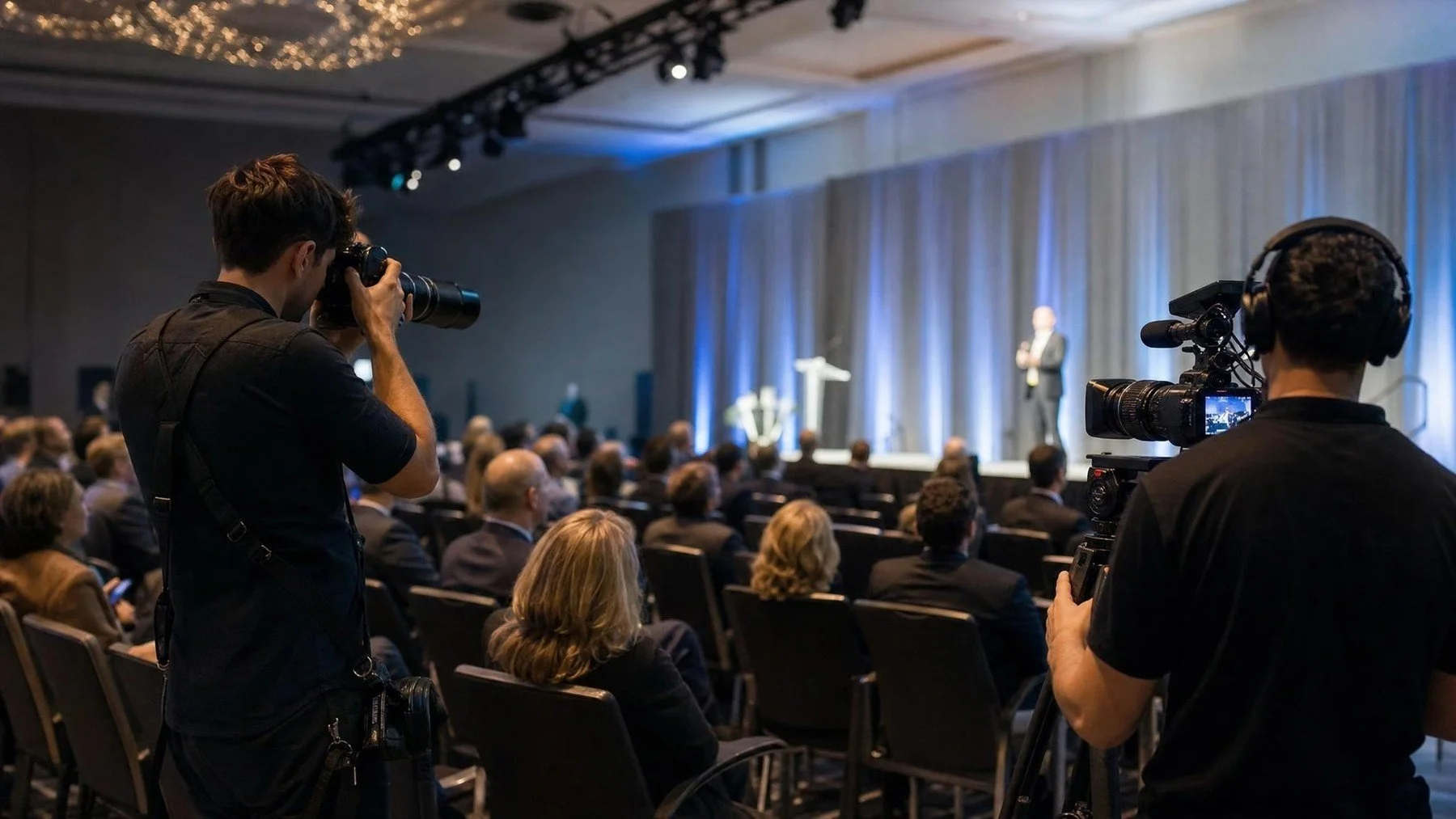
Give the photographer room to move for a handoff or group portrait while a video operator holds a stable line, continuous sound and a clean background. Walk the narrow stage edges with both leads before opening. Keep photo selects and video edits on separate approval clocks: an image may be ready for a same day recap while the film still needs caption, transcript and sound review.
Choose what each crew must deliver
List the immediate photo selects and every video output separately. The agenda should show where the two crews need different positions.
If both records have real destinations, Commission Uptown Media coverage with a brief for each crew.