
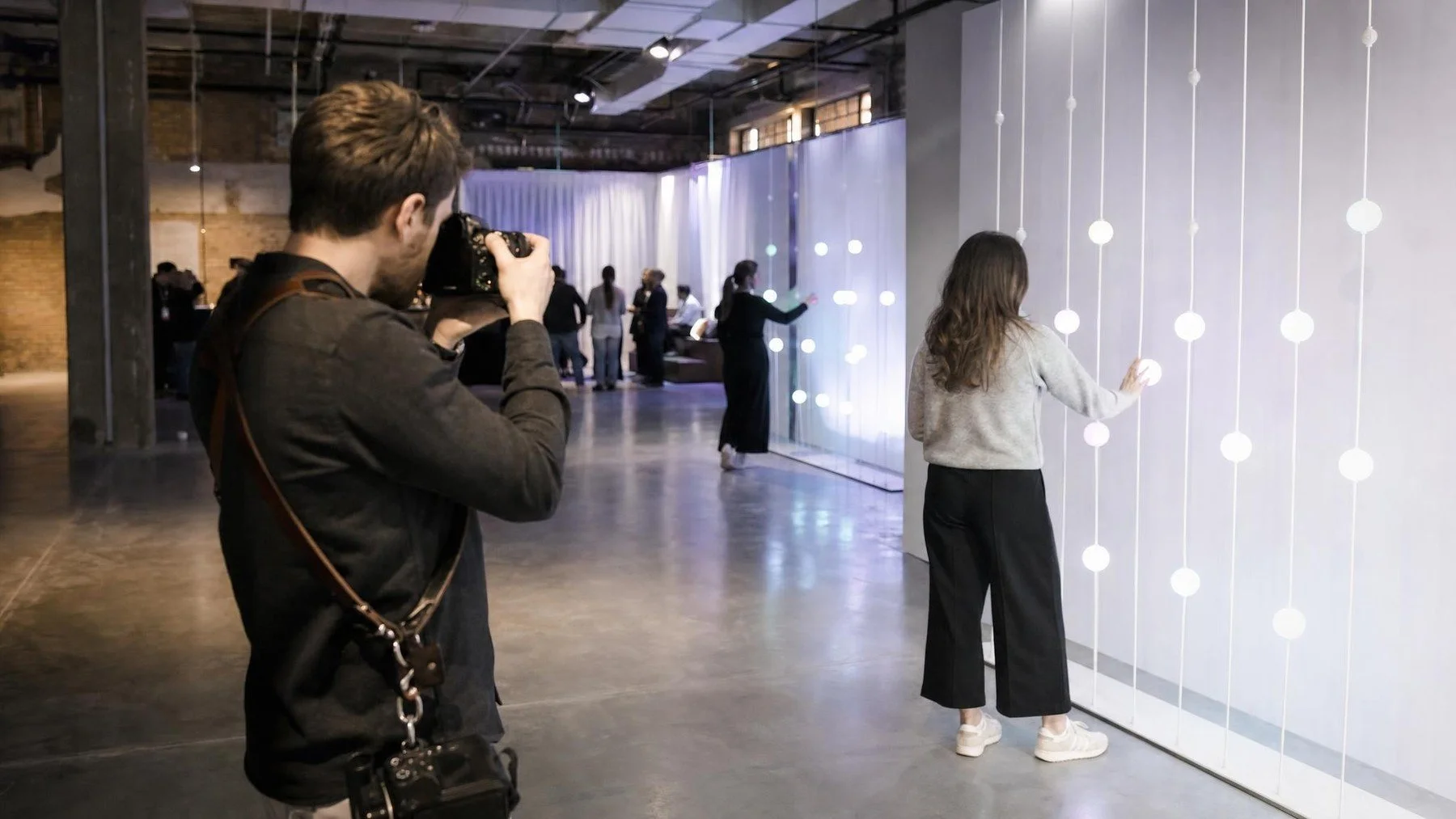
Who decides whether a brand activation photograph is useful, the agency producer, the client brand team or the partner who funded the feature? A practical brief names each decision owner and connects every required frame to an asset destination. That keeps the crew from receiving three competing shot lists on site.
In a Toronto activation brief, we would ask for the actual report and social layout before confirming the frame list. The proposed images need a stated destination and reviewer. That gives the crew a reason to protect a guest interaction instead of collecting attractive but unusable crowd pictures.
Begin with a proof to destination map
List the case study, client social recap and partner report separately. Each asks the camera to prove something different. “Energy” is not a shot instruction. A guest using the feature, a readable partner placement and a staff member explaining the product are observable scenes.
| Destination | Frame to protect | Decision owner |
|---|---|---|
| Agency case study | Guest interaction with context around the experience | Agency producer confirms access and timing |
| Client recap | Brand and product legible in the approved crop | Brand lead checks artwork and caption |
| Partner report | The contracted feature visibly in use | Partner contact checks the promised placement |
Test one representative frame at the actual report and social sizes before doors open. If a logo, guest and product cannot all remain clear in one crop, plan separate frames. A distant logo in a crowd image is not automatically proof of the partner activation.
Assign one owner to each approval
Name the agency producer who directs event day priorities, the client reviewer who checks brand use and the partner contact who confirms contracted proof. Choose one person who resolves conflicts.
Record the approval window for urgent selects. If each stakeholder reviews every image independently, the handoff will stall. Ask them to agree on a short release standard before capture begins.
Translate the experience into coverage zones
Map entry, product interaction, demonstration, hospitality, stage, partner feature and exit. Add the times when each zone matters and the people who can identify VIPs or creators.
Share floor rules, queue direction and no camera areas. The brand activation photography brief should help the crew move without interfering with the guest journey or the operating team.
Design sponsor proof as part of a real scene
List each obligated mark, feature or hosted moment. Aim for photographs that show the brand element in use and within the wider activation. A flat sign image may prove placement but often gives the marketing team little editorial value.
Confirm approved product names and any restricted packaging or unreleased material. Give the photographer one current file rather than verbal changes from several people.
What the delivery note should show
For each urgent file, a short delivery note can pair its filename with the intended destination and the exact scene it documents. For example, the agency case study receives the guest interaction, while the partner report receives a separate image of the sponsored feature in use. If the sponsored feature was never activated, mark that line incomplete rather than substituting a picture of signage.
Keep the original frame and approved crop connected in the handoff. A reviewer who sees only the crop cannot tell whether a missing product detail was outside the lens or removed later. The team can then compare the final proof against the brief without searching an unlabelled gallery.
What to do when proof and experience collide
The clearest partner logo may be on a wall that nobody approaches. The most convincing guest interaction may hide that logo entirely. Do not ask the photographer to fake a single all purpose frame. Reserve one natural interaction sequence and a separate partner view that shows the contracted feature in context. The report can then make two precise claims instead of one ambiguous one.
Give the event lead a way to resolve conflicts on site. If the activation queue moves or a product demonstration shifts to another zone, the producer can adjust access, while the brand reviewer keeps the artwork and caption rules intact. Record the change on the shot list so the final selects can be compared with the revised brief. If a required scene never happened, mark it missing rather than implying it was captured.
Use the Uptown Media brand activation photography service as the coverage reference. The campaign team should still supply its actual partner obligations and approval owners.
Turn proof into a brief
Send the campaign output sizes and the partner obligations. Ask who can confirm access, artwork and sponsor proof before the doors open.
When the proof map and owners are clear, Commission Uptown Media coverage for the named campaign outputs.