
Conference Photography Brief for Multi-Room Events
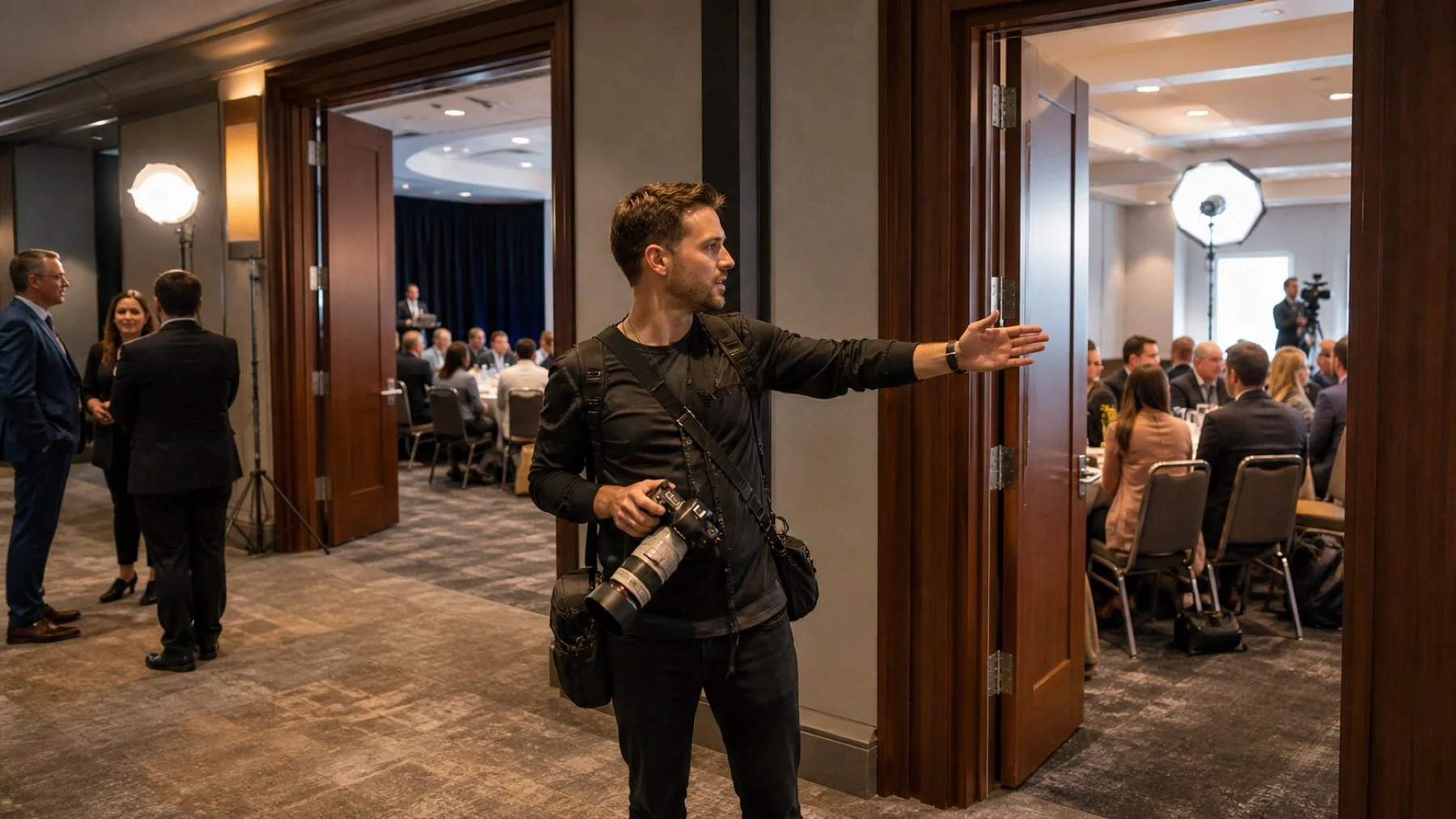
A conference photography brief for a multi room event must do more than list sessions. It must show the photography team where important moments overlap, who can make decisions, and which images your organization needs after the event. This guide helps you turn a complex agenda into a brief that works while the program is moving.
Start with decisions, not a shot count
Define the business uses first. Your communications team may need opening remarks for a morning update, while sponsors need activation coverage and leadership needs a concise gallery. Those outcomes tell the photographer which rooms and people carry the most weight.
Mark each agenda item as essential, useful, or optional. Add the image use beside every essential item. A room name by itself does not explain whether the priority is the speaker, audience response, sponsor branding, or the scale of the space.
Map overlaps across the full agenda
Place all rooms on one timeline and highlight collisions. If a keynote ends as three workshops begin, decide whether one photographer can move in time or whether the brief requires simultaneous coverage. Include walking time, elevator delays, security checkpoints, and stage access.
Give each room a clear arrival window instead of telling the crew to cover everything. A five minute wide shot, a speaker sequence, and an audience reaction set may satisfy one session. Another session may require sustained coverage because an award, reveal, or executive appearance cannot be repeated.
Give the crew a reliable control point
Name one event contact who can approve changes. That person should receive agenda updates, know the venue team, and understand the image priorities. Multiple chat threads create conflicting instructions when a room changes or a speaker arrives late.
Use a simple escalation rule. The photographer protects essential moments first, then sponsor obligations, then general atmosphere. Your producer can change that order, but the brief should establish the default before doors open.
Plan access and movement before the doors open
Share a floor plan, credential rules, loading details, secure storage options, and any rooms with restricted entry. Ask the venue when photographers can test sightlines and whether tripods, light stands, or backstage movement need approval.
For Toronto conferences, connect the brief to your chosen conference and trade show photography coverage. The scope should reflect actual room distances, stage positions, audience size, and the pace of the program.
Specify a delivery structure your team can use
Set the urgent selection, final gallery date, file sizes, and folder labels before the event. Organize delivery around practical groups such as opening session, workshops, sponsors, networking, awards, and portraits.
Ask who can approve same day images and how quickly that person can respond. A rapid delivery promise fails when nobody owns selection or a brand review. End the brief with one contact list and one current agenda link.